
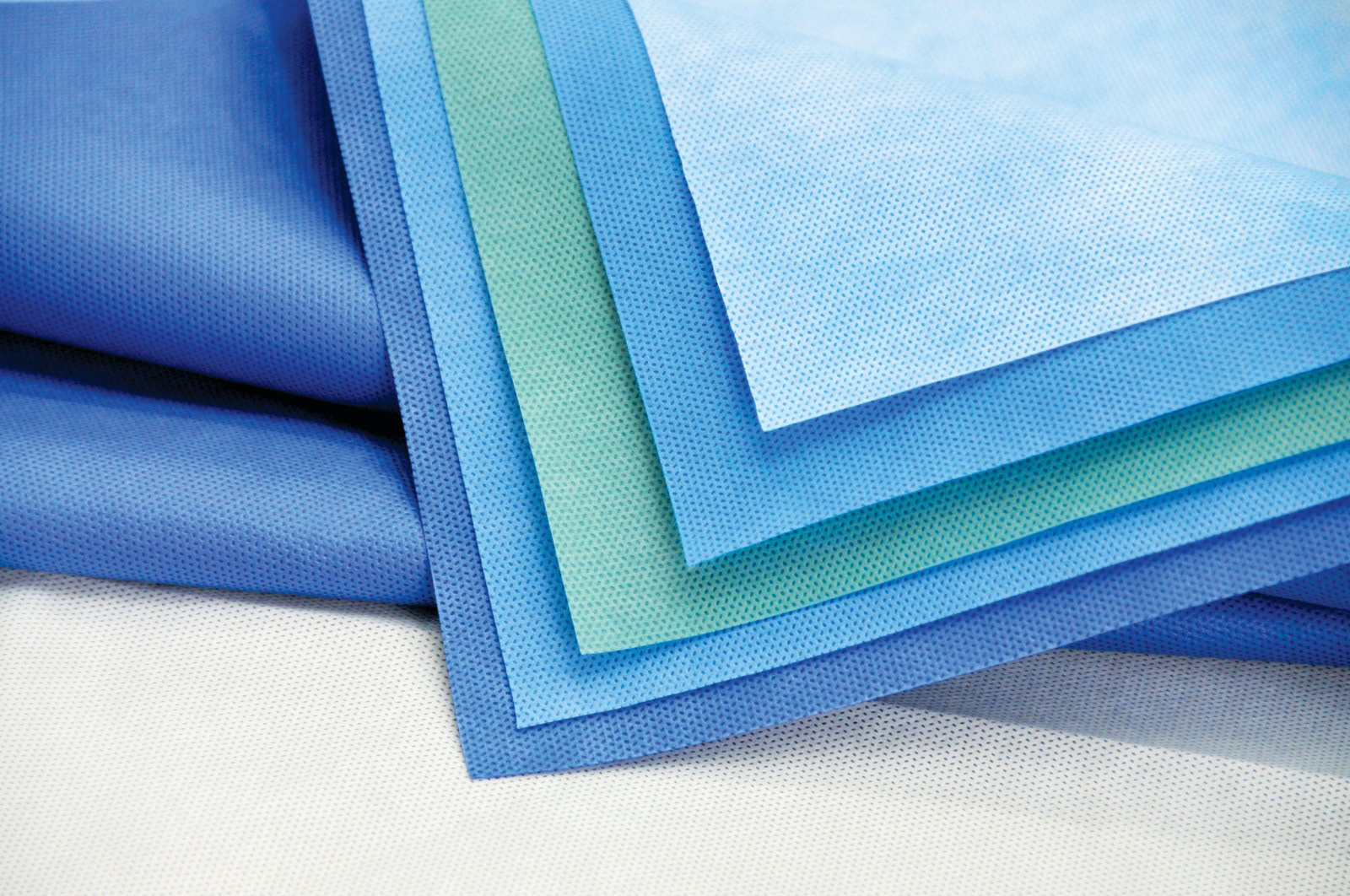
Medical nonwoven fabric refers to the composite nonwoven fabric with the function of anti-alcohol, anti-plasma, anti-water pressure, with the composite product performance of spunbond and meltblown, soft handfeel, with a variety of colours to choose from, non-toxic, odourless and highly efficient bacterial isolation. And through the special treatment of the equipment, it can achieve anti-static, anti-alcohol, anti-plasma, water repellency and other efficacy, medical nonwoven fabrics of the above characteristics, is tailor-made for medical products. Because static electricity, alcohol, blood plasma, liquid, etc. are very easy to appear in the medical process of interference factors, medical non-woven fabrics are relatively high cost, but reduces the risk of cross-infection.
Medical nonwoven fabric is what material is made of
Medical nonwoven fabric is selected polypropylene (material) particles as raw materials, after spunbond, meltblown, spunbond (SMS) process of compression and become, mainly through the chemical fibres and plant fibres contained in water or air as a medium in the suspension conditions or in the papermaking machine wetting and drying and made. Named for the appearance of the fabric and some of the properties of the fabric, it is bacteriostatic, hydrophobic, breathable, and dandruff-free, and is usually used for the packaging of sterilised items, and is disposable and does not need to be cleaned.
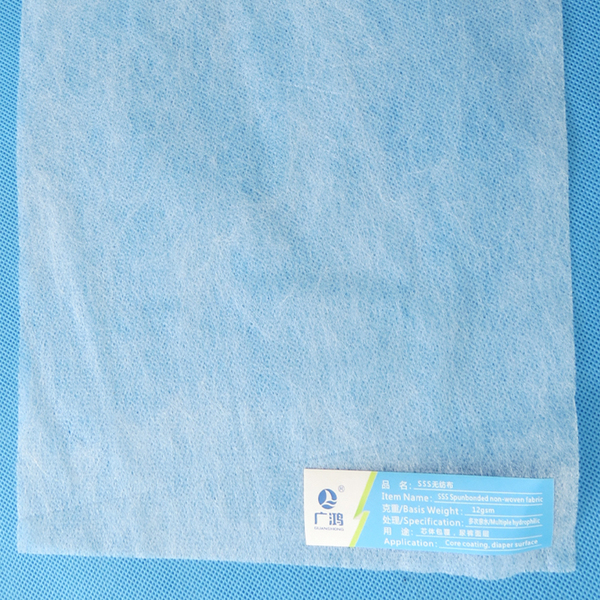
In fact, it is a general term for a class of nonwoven products with medical and hygienic applications as the main purpose and with medical characteristics. It is a new category that combines the use of nonwoven technology and medical science. The development of medical nonwoven fabrics not only makes the number of mutual infections in the hospital cut down, the use of medical nonwoven fabrics in the medical profession occupies an important position.

Although medical nonwoven fabrics do not belong to medical devices, but its existence is related to the quality of medical device sterilisation, medical nonwoven fabrics as packaging materials its own quality and packaging methods to ensure the level of sterility is crucial. The purpose of the packaging of sterilised items is to keep the medical devices sterile during the storage period before use, so the sterile packaging materials are required to have good sterilisation effect and isolation of bacteria.
The difference between medical non-woven fabric and gauze, bandage and cotton
The difference in material:
1 medical non-woven fabric: non-woven structure, the main material is polyester, rayon, cotton.
2 gauze: is a kind of warp and weft sparse cotton fabric, the main material for cotton, polyester.
3 bandage: made of gauze or cotton, the main material is cotton, polyester.
Difference in use:
1 non-woven fabric: mainly for large burns, scalds, fumigated wounds when the treatment.
2 gauze: mainly used when bandaging already bleeding wounds.
3 Bandage: mainly used for sports protection, fixation, bandaging use.
Compared with traditional cotton, medical non-woven fabrics have the following different characteristics:
Aseptic packages can be stored for a longer period of time (6 months for general double-layer non-woven fabrics):
Disposable items, which will not produce cotton dust and thus cause air pollution;
has a good balance of breathability and bacterial blocking;
Medical non-woven fabrics are suitable for pressure steam sterilisation, O-sterilisation, but non-woven fabrics containing plant fibres are not applicable to low-temperature plasma sterilisation.